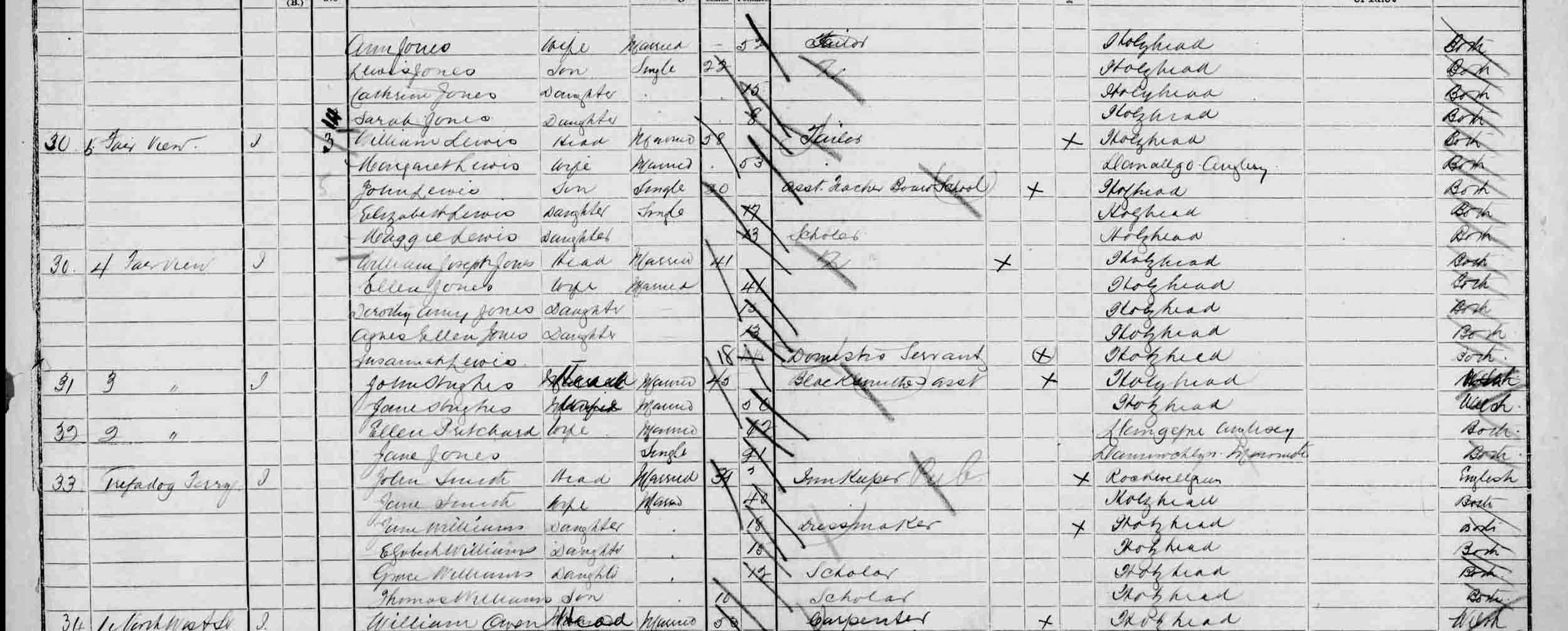
When you begin researching your family history, it's common to come across words you haven't heard before and don't know the meaning of. A glossary can help you with these terms. Simply click a letter to look up the word you are unsure of.
Acrobat
Acrobat is the software that allows you to read, search and print documents on Windows and Mac. Genealogy research CDs are often in the form of virtual books and come with Adobe Acrobat Reader Software for Windows. The files are bookmarked so you can jump to various sections and most are searchable and printable.
Ahnentafel
The name is German for table of ancestors and is one of the standard reports found in many programs.
Ancestor
A person from whom you descend.
Ancestry
Denotes all your ancestors from your parents as far back as possible.
Ancestor Chart
This shows the ancestors of the selected person, parents grandparents etc. It is normally of the form of an inverted pyramid. They can also take a circular form.
All Relations Chart
This type of chart is often the way trees are drawn by hand showing all the relations of a person. It is available in Reunion for the Mac and can be constructed in WinGenea. Be aware that these are typically large due to their complex nature.
Banns
Public annoucement of an intended marriage. These are usually made in a church.
Base-Born/Bastard
Illegitimate child.
Biography
A book written about an individual. Compiled biographies about specific groups of people can be useful in your research.
Birth record
Details about an individuals birth. These records usually contain the name of the baby, the fathers name, the mothers name, the date of birth, and the county where born.
Bibliography
A list of writings related to a particular subject – these are sometimes annotated.
Bond
A binding agreement. A lot of bonds have existed for centuries and appear in marriage, land and court records.
Cemetery Records
Records of the names and death dates of those buried. This can include maps of the grave sites. Tombstones can also be useful, as they can give you the birth and the death year of your ancestors, and sometimes other family names.
Church Records
Records kept by the church, usually including baptisms, marriages, burials and christenings. These records can tell you the names of the individuals involved, the location and date of the events, and the clergyman's name. Additional information (e.g. individuals place of residence, names of witnesses, etc) can sometimes be found on these recordBack to Tops.
Deed
A document transferring ownership of property.
Descendant Chart
This starts with a selected person and shows their descendants generation by generation, children, grandchildren and so on. The information given on each person could also include a picture.
Digitising
The process of converting an image regardless of format (fiche, film, paper) to a digital format such as PDF.
Direct Line
Line of descent traced through the relationship of parent and child.
Directories
Important records to find out more about your ancestor's lives. Directories can come in all types: telephone, street, religious, post office, trade, etc. If one of your ancestors was a blacksmith, for example, then you may find them in a trade directory. This could give you an indication of their professional life. There are directories for many things, so these are an invaluable resource for your research.
Dissenter
Person who refused to belong to the Church of England.
Dowager
Widow holding title/property received from her deceased husband.
Emancipated
Freed from parents control/slavery, or of legal age.
Enumeration
List of people, e.g. in a census.
Estate
Assets of an individual, including land/personal belongings/debts.
FHC
Family History Centre
FHL
Family History Library
FHS
Family History Society
Folio
This is a census reference number normally stamped at the top right hand corner of every other census book page and is used as a reference in indexes.
Freeman
Male of legal age with own land, occupation, and the right to vote.
Full Age
Of legal age (the age changes depending on the place and current law).
Gazetteer
A book containing alphabetically listed names (with descriptions) of places in a specific area. A gazetteer of a county would name all towns villages, cities, lake, rivers, and mountains in that county.
Gedcom
It is the name given to a standard file format for genealogical information specified by the Church of Latter Day Saints. It is derived from Genealogical Data Communication.
Genealogist, The
One of the most popular online research sites, with a range of records available.
Grantee Index
Index of individuals buying or receiving property.
Grantor Index
Index of individuals selling, granting, conveying or transferring property.
GRO
General Registrar's Office.
Heir
An individual with the rights to inherit an estate on the death of an ancestor.
H.O.
Home Office. Often found on British doc­uments, along with a reference number.
Hourglass Chart
This starts at the selected person and goes down through the descendants and up through the ancestors.
IGI
International Genealogical Index
Immigrant
A person moving from one country to another country.
Index/Indexing
An index is an alphabetical list of names from a particular set of records. Indexing is the process of creating an index normally by Surname or combined Surname and Forename to material such as the census. Indexes to the census normally give a Piece and Folio Reference.
Inventory
A legal list of all property in a deceased individual's estate.
Juvenis
Minor/below legal age.
Knave
Servant boy.
Land Records
Another word for deed. This is proof that a piece of land is owned by an individual. These records usually include a name, location of the property, and the period of ownership.
LDS
Latter Day Saints also known as the Mormon church.
Manumission
Being released from slavery or servitude.
Marriage Contract
A legal agreement between prospective spouses made before marriage. This is usually to determine their property rights and those of their children.
Marriage Record
A record containing information about a marriage of two individuals. These records usually contain the name of the bride/groom, date of the marriage, county where the ceremony took place. Other information that can sometimes be found includes the birth place of the bride/groom, residence of bride/groom, names of witnesses, and information about previous marriages.
Maternal Line
Line of descent traced through the mother's ancestry.
Microfilm
Film rolls containing reduced images of documents. The standard storage used for historical documents is 35mm film or fiche.
Microfiche
Reduced images of photographed documents provided as rectangular sheets of film containing a number of rows of frames.
Military Records
Records of military and civilian workers. These records can include army lists, navy lists, WW1 lists, WW2 lists, and more. If you have an ancestor that served in the army or worked in the military, you should be able to find information about them in military records.
Nuncupative Will
An oral will declared by an individual at the end of his/her life before a number of witnesses.
ONS
One Name Study (this person has registered to track ALL people with a particular surname)
Paleography
The study of handwriting.
Parish Records
Transcripts of church records which date back to 1538. The Phillimore series cover marriages from mainly southern areas. The parish coverage is given in the book Index to Parishes in Phillimore Marriages by M. E. Bryant Rosie. These are complemented by various other transcripts done by the Register Society which contain baptisms and marriages.
Portable Document Format files are created by Adobe Acrobat which allows you to view books and other documents as computer based material. These can have search facilities, bookmarks and include multimedia.
Piece
This is the name given to a section of census containing a number of enumeration districts for an area
Posthumous
A child born after the death of its father.
Primary Source
Records that were created at the time of the event. A birth certificate would be a primary source for a birth date, as the certificate was created at the time of the birth.
PRO
Public Record Office in the United Kingdom
Probate Records
Records disposing of a deceased individuals property. These can include the individuals last will and testament (if one was made), the name of the deceased, the age at time of death or birth date, property, members of the family, and last place of residence.
(Q)
No entries for this letter.
Reconveyance
A property that was sold to another person is transferred back to the original owner.
RG
Registrar General
Secondary Source
A record that was crated a significant amount of time after an event occurred. For example, a marriage certificate would be a secondary source for a birth date (it would also be a primary source for a marriage date).
SOG
Society of Genealogists
Statute
Another term for a law.
S&N Genealogy
The largest UK genealogy publisher and retailer. A family-run company based in Wiltshire.
(T)
No entries for this letter.
(U)
No entries for this letter.
Vestry
The ruling body of a church.
Warranty Deed
Guarantees a clear property title from the seller to the buyer.
Witness
An individual at an event (e.g. a marriage) who can confirm that it took place.
(X)
No entries for this letter.
Yeoman
Farmer who works on a free estate.
(Z)
No entries for this letter.